Khiva Walking Tour
Independent Route

Khiva Self Guided Walking Tour

Ichan Kala's compact 0.6-kilometer perimeter allows travelers to navigate all major monuments independently without organized groups. The walled city's grid layout and numbered plaques make orientation straightforward once you understand the quarter system and logical monument clusters.

6 min read Updated 2026-09-23 Fact-checked
Khiva Self Guided Walking Tour

Quick answer

A khiva self guided walking tour begins at the West Gate (Ota Darvoza) and follows a counter-clockwise circuit through Ichan Kala's four quarters, covering 12–15 monuments in 3–4 hours. The 250,000 UZS combined pass (valid 2 days) grants access to all ticketed sites. Start between 08:00–10:00 to avoid midday heat and tour groups, allowing time to double back to monuments that warrant longer visits.

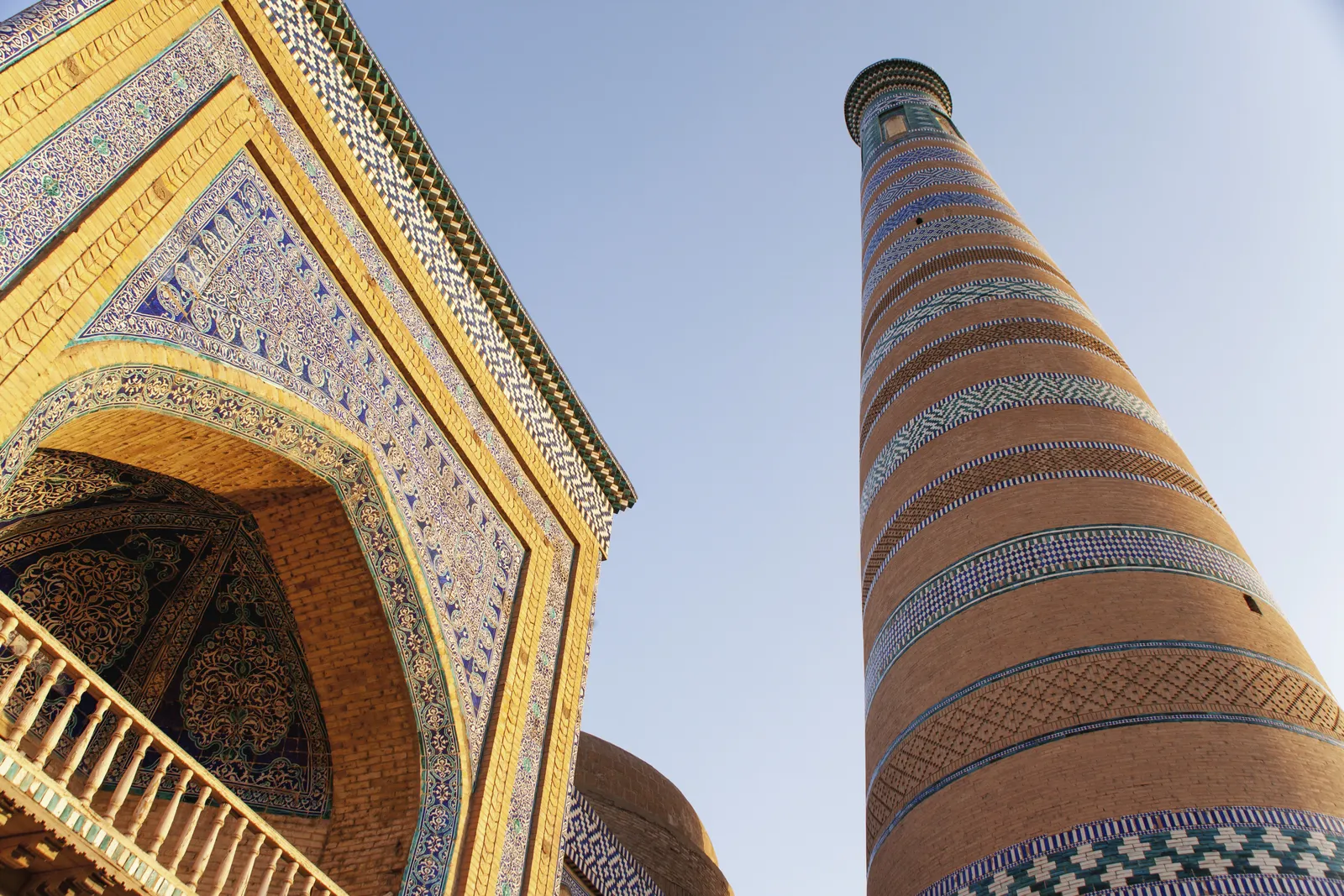
Ichan Kala contains 54 historic structures within a 26-hectare rectangle—a density that makes independent exploration viable without professional guidance. The city's Silk Road layout follows a cross-axis design: Palvan Darvoza (east) to Ota Darvoza (west), intersected by a north-south spine connecting Bogcha Darvoza to Tash Darvoza. Every monument sits within 400 meters of this central cross. The self guided walking route relies on visual landmarks rather than street names. Kalta Minor minaret's turquoise tile marks the eastern anchor point. Kunya Ark citadel occupies the western edge. Islam Khoja minaret—at 56 meters the city's tallest structure—provides constant orientation from any quarter. Numbered plaques in Uzbek, Russian, and English mark each monument entrance, corresponding to the pass booklet distributed at ticket counters. The logical sequence moves counter-clockwise from Ota Darvoza: Kunya Ark fortress and ceremonial halls first, then northeast to the madrasah cluster (Muhammad Amin Khan, Kalta Minor courtyard), southeast through the mausoleum quarter (Pakhlavan Mahmud, Sayid Allauddin), and northwest past Islam Khoja complex back to the starting gate. This routing minimizes backtracking and positions labor-intensive climbs (Islam Khoja's 118 steps, Juma Mosque's forest of 213 wooden columns) in the cooler morning window. Independent walkers should allocate uneven time across monuments. Pakhlavan Mahmud's tile work justifies 30–40 minutes. Tash Khovli palace (harem, reception courts, stable yard) requires 45 minutes to navigate its three compounds. Smaller sites—Ak Mosque, Anush Khan baths—warrant 10-minute walk-throughs. The 2-day pass validity allows splitting the circuit: eastern monuments on day one, western quarter and any revisits on day two. Most travelers complete the khiva self guided walking tour in a single intensive morning, then return at dusk when the fortification walls and minarets gain definition under angled light.

“Ichan Kala's 26-hectare grid places every monument within 400 meters of the central cross-axis, making independent navigation straightforward once you identify the four anchor points.”
Itinerary

Suggested Route for Your Khiva Self Guided Walking Tour

This route covers Ichan Kala's essential monuments in a logical loop, starting at the West Gate and circling clockwise through the inner fortress. Budget 3–4 hours for a relaxed pace with time to climb minarets and explore interiors.

08:00

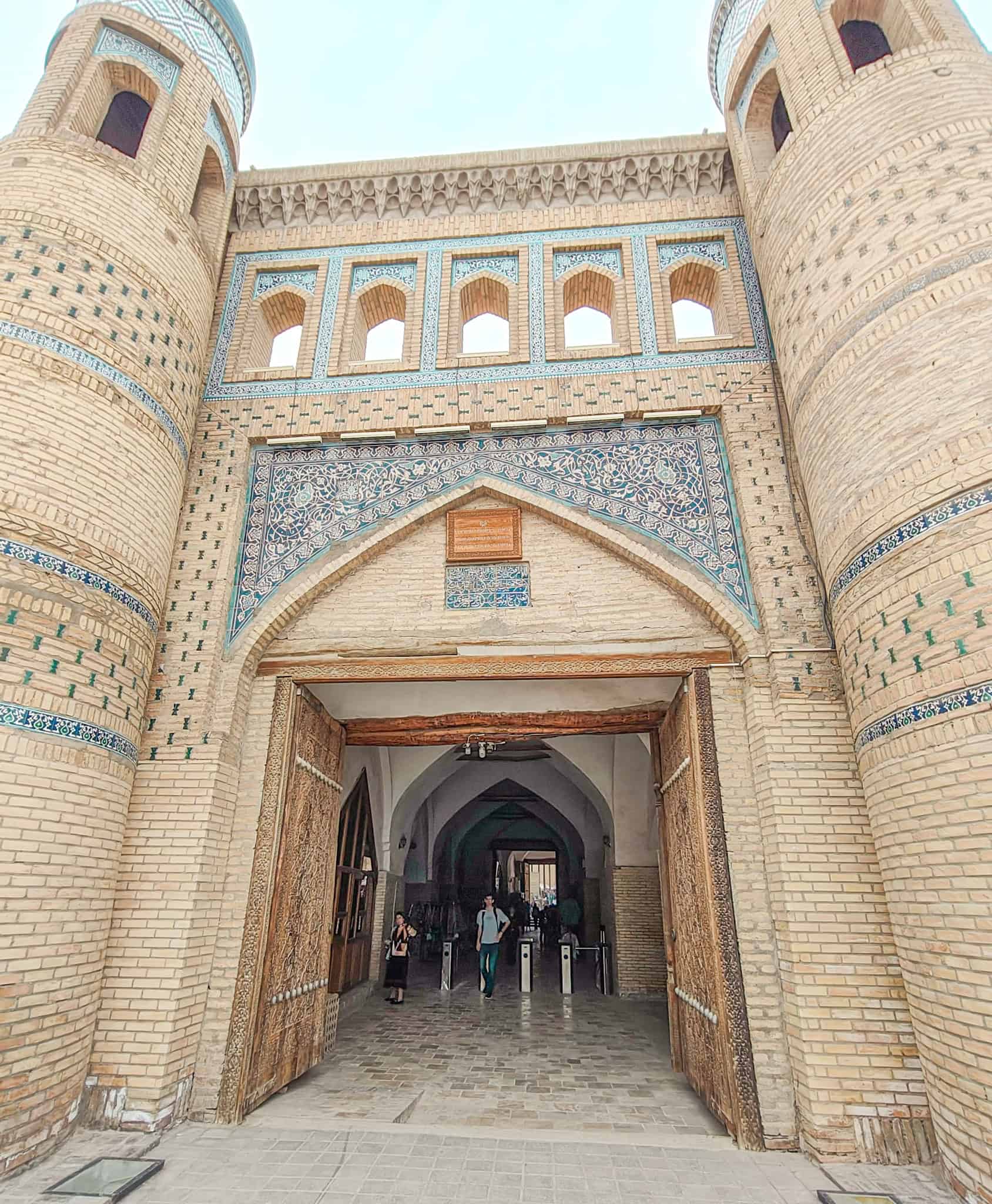
Enter through Ota Darvoza (West Gate)

Begin at the main entrance where you'll purchase your 250,000 UZS combined pass, valid for two days across all monuments. The cooler morning air makes walking more comfortable.

08:15

Kalta Minor Minaret and Kunya-Ark

The stub minaret's turquoise tiles catch early light beautifully; the adjacent fortress complex holds throne rooms and a harem. Allow 30 minutes to explore both.

09:00

Juma Mosque

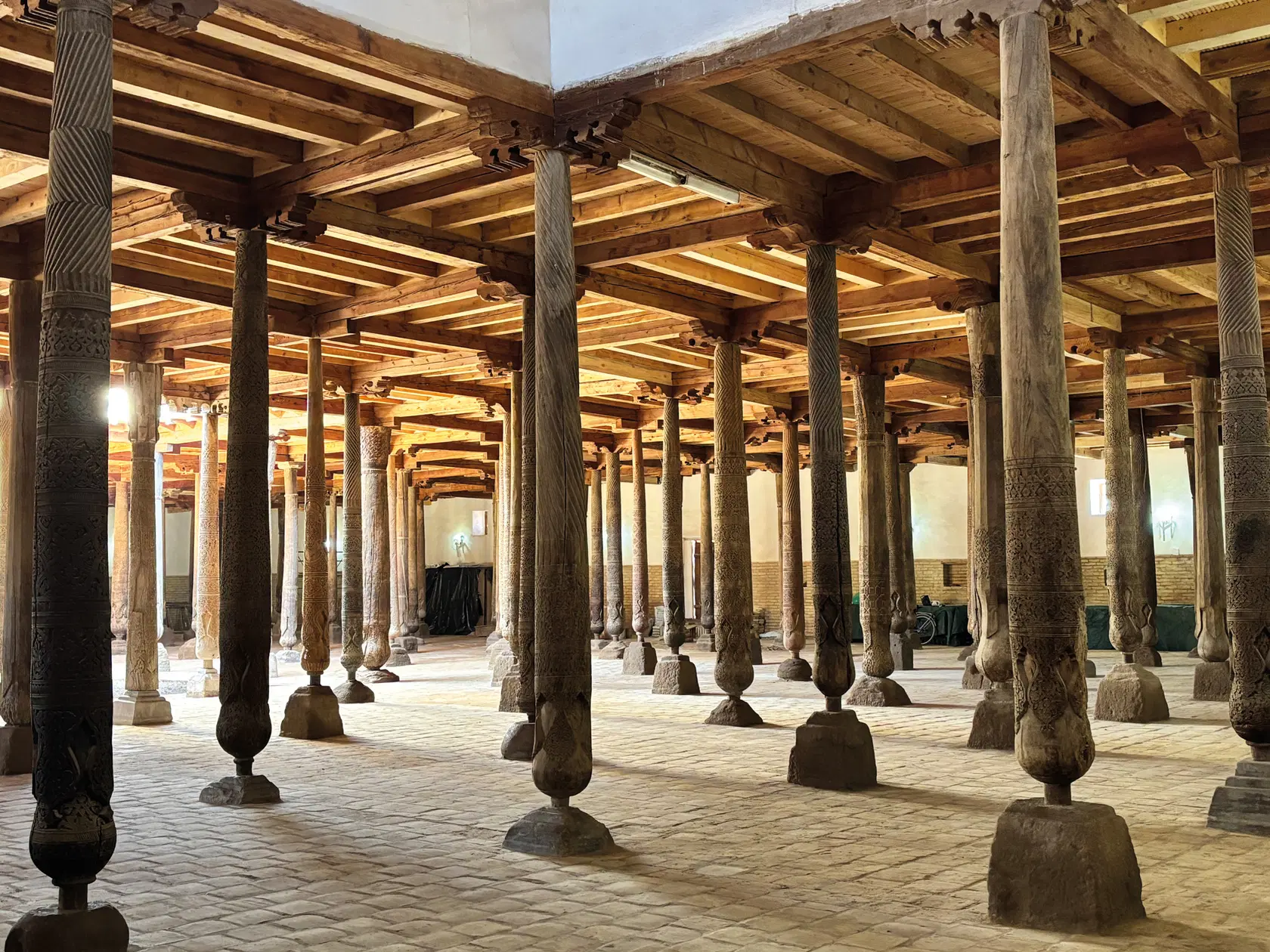
Walk through the forest of 212 wooden columns, many salvaged from earlier structures and dating back centuries. The dim, cool interior offers a quiet contrast to the open courtyards.

09:30

Islam Khoja Complex

Climb the 118 steps of Khiva's tallest minaret for rooftop views across the city; the attached madrasa now houses a small applied-arts museum. The climb takes about 15 minutes.

10:15

Tosh Hovli Palace

Navigate the courtyards of the khan's 19th-century residence, starting with the reception court and moving through the harem's tiled chambers. Intricate majolica covers nearly every surface.

11:00

Pakhlavan Mahmud Mausoleum

This pilgrimage site honors Khiva's patron saint, a poet and wrestler; the turquoise dome dominates the skyline. Locals still visit to pay respects, so move quietly through the interior.

11:30

Exit via Palvan Darvoza (East Gate)

Loop back through the bazaar lanes near the eastern gate, where you'll find craft workshops and a few quiet cafés. The route naturally returns you toward the main square.

What to see

Essential Landmarks for a Khiva Self Guided Walking Tour

Ichan Kala contains a dense collection of architectural landmarks that reflect the historical development of Khiva. Navigating these structures provides insight into the craftsmanship and urban planning of the Khorezm region.

Kalta Minor Minaret

Kalta Minor Minaret

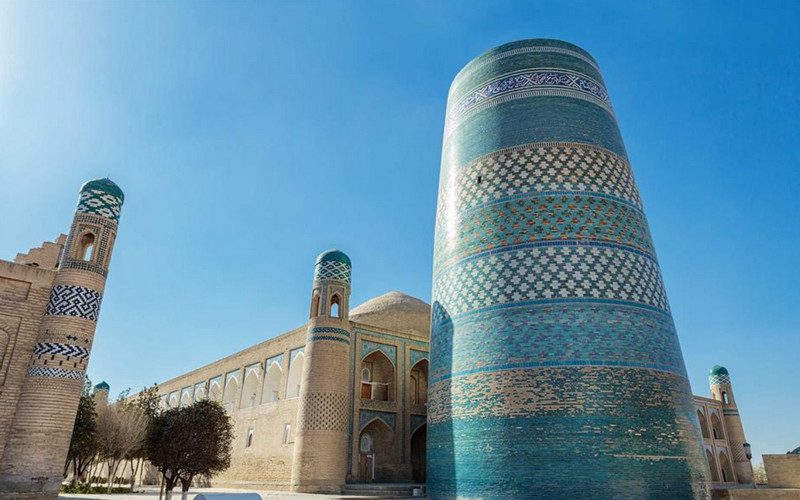
Distinguished by its unfinished height and vibrant blue tilework, this minaret was intended to be the tallest in the region. Its wide base contrasts with the tapering proportions of surrounding structures.

Observe the tile patterns from the main street early in the morning.
Juma Mosque

Juma Mosque

This mosque is noted for its 213 wooden columns, each carved with unique geometric and floral motifs. The interior maintains a lower light level, which helps preserve the ancient timber craftsmanship.

Walk slowly between the columns to see the different carving styles.

Islam Khoja Minaret

Islam Khoja Minaret

Standing as the tallest structure in Ichan Kala, this minaret offers a view over the surrounding mud-brick city walls. It features alternating bands of turquoise and white brickwork.

Climb the internal staircase to the gallery for an elevated city perspective.

Tash Hauli Palace

Tash Hauli Palace

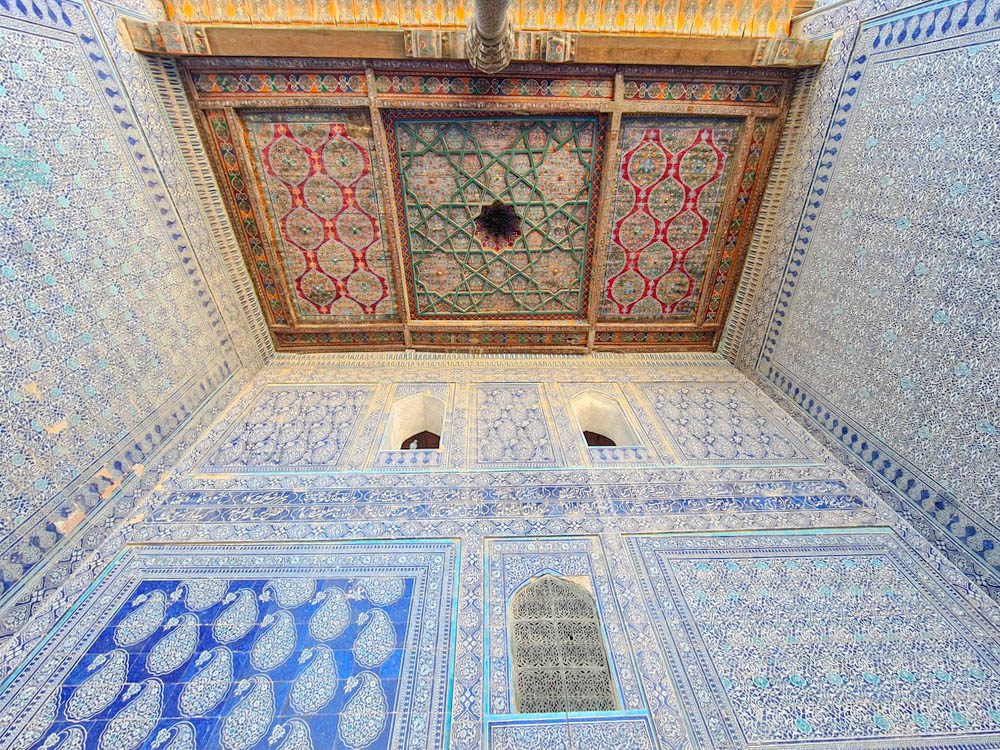
This former royal residence consists of several courtyards decorated with complex majolica tiles and carved wooden pillars. The harem area showcases the private quarters of the khan and his family.

Focus on the ceiling decorations in the main reception courtyard.

Opening hours

Operating Hours for a Khiva Self Guided Walking Tour

Ichan Kala is open daily throughout the week for visitors exploring the historic center. The site maintains consistent hours for all walking tour participants.

Monday
08:00–20:00
Tuesday
08:00–20:00
Wednesday
08:00–20:00
Thursday
08:00–20:00
Friday
08:00–20:00
Saturday
08:00–20:00
Sunday
08:00–20:00
Access to monuments typically ends at 20:00 each evening.
Directions

Logistics and Access for Your Khiva Self Guided Walking Tour

Ichan Kala is located at 41 Boltaeva Street in the Khorezm region. The walled city is accessible primarily via the West Gate, known as Ota Darvoza, which serves as the main entrance for visitors.

Taxi 10–15 min —

Direct transfer from Khiva Railway Station to Ichan Kala

On foot 15–20 min —

From Khiva city center to West Gate (Ota Darvoza)

Car Varies by origin —

Travel via M351 highway towards Khiva center

Plan your arrival for the 08:00–10:00 window to avoid midday heat and peak tour group crowds. Access the site via the West Gate, as it is the most convenient entry point for starting your self guided walking tour.

Book

Check availability

Frequently asked

Frequently asked questions about khiva self guided walking

Everything you need to know about khiva self guided walking tour

Is a khiva self guided walking tour recommended for Ichan Kala?

Yes, exploring the UNESCO heritage site of Ichan Kala on your own allows you to appreciate the intricate tilework and ancient defensive walls at your own pace. A khiva self guided walking tour provides the flexibility to linger at specific minarets or courtyards without rushing. Visitors gain a deeper understanding of the Central Asian Silk Road history by navigating the narrow earthen lanes independently. Engaging in a khiva self guided walking tour is a popular way to experience this open-air museum.

Keep reading

More guides & pages